.svg)


Fiverr vs Upwork: Where Should You Order as a Buyer?
If you are trying to decide between Fiverr and Upwork, this comparison is written from a pure buyer perspective.
I have personally used both platforms for years and spent around $100,000 in total across projects of all sizes, from quick $50 tasks to multi-thousand-dollar builds.
Below is the real difference, without marketing fluff.
The Core Difference (Short Version)
- Fiverr is productized, fast, and predictable
- Upwork is process-heavy, flexible, and time-consuming
Neither is “better” overall, it depends entirely on project size, clarity, and how much time you want to spend managing freelancers.
Small Projects (Under $500)
Fiverr
Perfect for clearly defined, repeatable tasks, for example:
- Backlinks
- Copywriting
- Landing page sections
- Logo tweaks
- Simple Webflow fixes
Why Fiverr works here:
- 2-step ordering process
- 1–2 short requirement questions
- You know exactly what you’re buying
- Fixed price, fixed scope
- Minimal communication needed
This is where Fiverr truly shines.
Upwork
This is where Upwork becomes inefficient.
Typical experience:
- You post a job
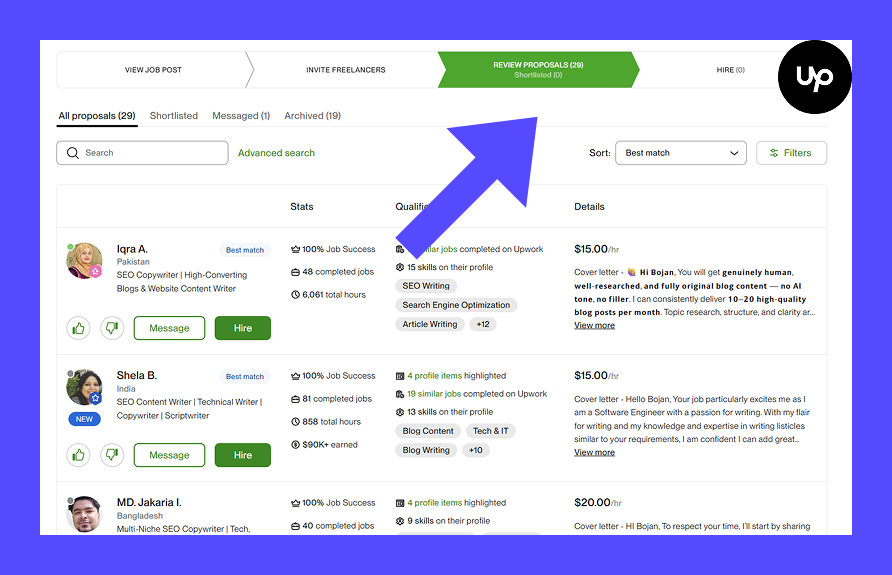
- You receive 20–50 proposals
- ~90% are low-effort or generic
- Many freelancers clearly did not read your description
- You must write an extremely detailed brief just to filter noise
For small tasks, the time cost alone often exceeds the project value.
Winner for small projects: Fiverr
Mid-Size Projects ($500–$2,500)
Fiverr
At this level, Fiverr Pro (Vetted Professionals) becomes very valuable.
Benefits:
- Smaller, curated talent pool
- Higher skill baseline
- Faster communication
- Refund protection via Fiverr Pro
- Less risk overall
You still get structured offers, but with higher quality execution.
Upwork
You will receive:
- More experienced freelancers
- Many agencies (even if they present as individuals)
- A wider range of approaches and pricing
Downside:
- You must manually review proposals
- You must manage interviews
- You must compare vastly different scopes
- The quality depends heavily on how well you wrote the brief
Upwork works here, but it demands effort.
Winner: Depends
- If you value speed and clarity → Fiverr
- If you want custom solutions and flexibility → Upwork
Large Projects ($2,500+)
Fiverr
Most large projects are handled by agencies, even if they appear as individual sellers.
Things to know:
- Sellers with 5,000+ reviews are almost always agencies
- There is an agency filter, but many agencies avoid it because it lowers conversion
- Harder to distinguish team size unless you ask directly
Upwork
Very similar situation:
- Many “freelancers” are actually agencies
- The proposal review process becomes long and repetitive
- Selection fatigue is real
Key rule for both platforms:
👉 Always chat before starting a contract or placing an order
For large projects, success depends far more on communication and process than on the platform itself.
Winner: Neutral
Both platforms work, but only if you treat them seriously.
Feature Comparison (Buyer Perspective)
Fiverr – Buyer Features
- Fixed-price packages
- Clear scope before purchase
- Fast ordering flow
- Fiverr Pro (vetted sellers)
- Refund protection (Pro)
- Escrow handled automatically
- Minimal back-and-forth
- Ideal for repeatable services
Upwork – Buyer Features
- Custom pricing and scope
- Hourly or fixed contracts
- Proposal-based hiring
- Time tracking for hourly work
- Long-term freelancer relationships
- More flexibility for undefined projects
- Better for evolving or complex builds
My Honest Recommendation
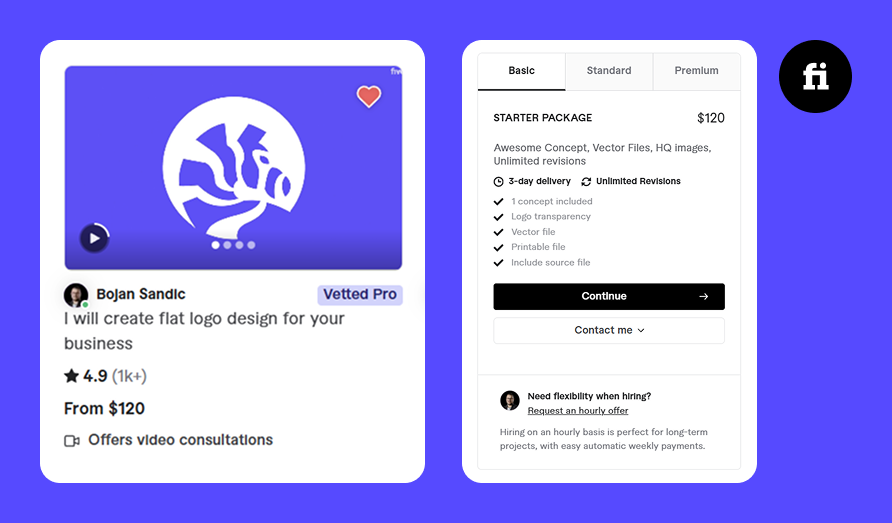
Use Fiverr if:
- You want speed
- You want predictability
- You know exactly what you need
- You don’t want to manage freelancers
Use Upwork if:
- Your project is complex or evolving
- You want to interview and compare approaches
- You are building long-term collaborations
- You are comfortable managing people and process
Final Tip (Very Important)
No matter the platform:
- Always talk to the seller before committing
- Always clarify scope, timeline, and deliverables
- Large budgets don’t reduce risk, communication does
If you want to avoid mistakes most buyers make, platform choice matters far less than how you use it.
.svg)
.svg)

